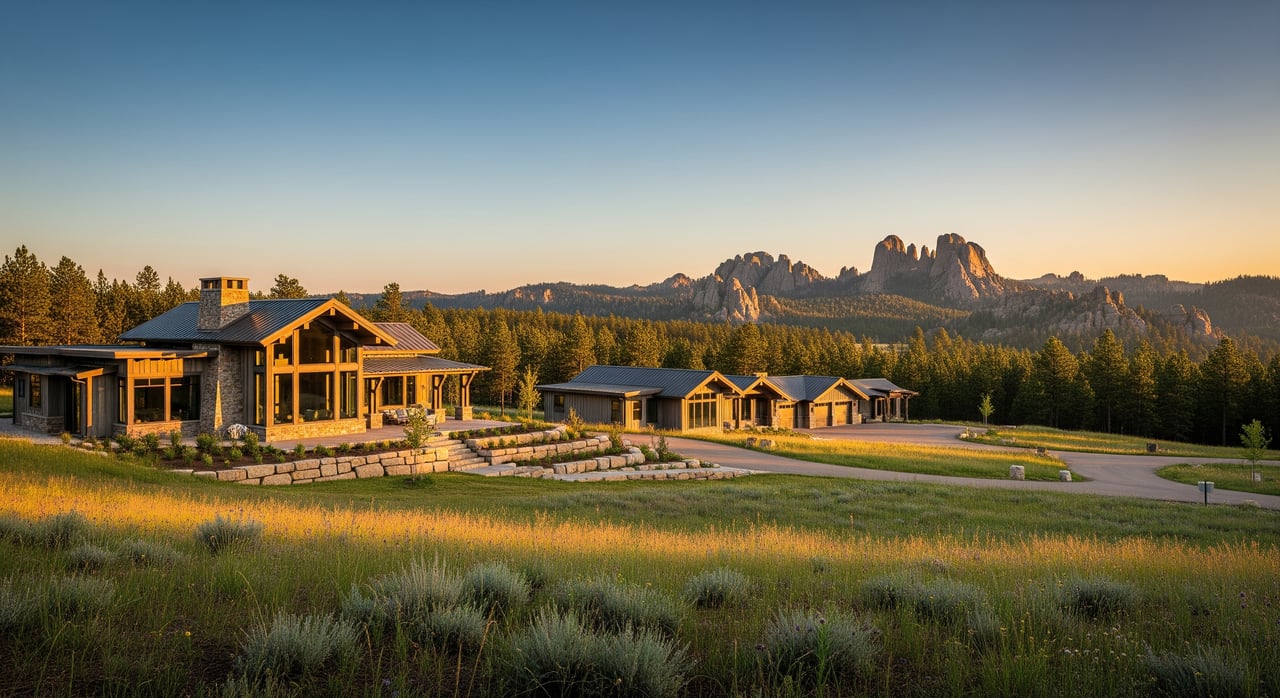
Build‑And‑Hold: Multi‑Lot Investing Near Custer
October 16, 2025
October 16, 2025
What if you could secure land near Custer today, then let time, careful planning, and the right utilities do the heavy lifting on value? If you’re drawn to the Black Hills lifestyle and exploring a multi-lot strategy, you’re not alone. You want clear steps, local realities, and a plan that balances reward with risk. This guide gives you a practical path for build-and-hold investing around Custer so you can move forward with confidence. Let’s dive in.
Build-and-hold means you buy multiple lots or a parcel you plan to split, then hold for appreciation, future build-out, or rental income. In the Custer area, your outcomes depend on access, utilities, terrain, and local rules. Done well, you can create flexibility: sell a few lots, keep the best site for yourself, or phase cabins later.
In the Black Hills, these three issues make or break a deal. Confirm them early, in writing.
Custer County requires lawful access and right-of-way that meet subdivision standards before a plat is approved, and the county has denied plats when access fell short. Review access language and plan for road standards up front. Local reporting shows approach permits and road cuts are a frequent bottleneck, so build time and fees into your budget. You can review examples of plat denials and planning pressures in the county’s local coverage of a denied plat request and in reporting on approach permits and rapid growth.
Inside the City of Custer, confirm if municipal water is available and what tap rules apply on the City of Custer utilities page. Outside city service, most investors consider wells or rural water connections. South Dakota’s water rules treat domestic use differently from larger systems, and certain situations may require a water right before drilling. Review requirements and lead times with the state’s Water Rights Program and licensed drillers using the state’s guidance on drilling a well and water rights.
Most lots outside city sewer will rely on on-site wastewater systems. In parts of the Black Hills, shallow rock or soil limits can rule out a conventional drainfield or require higher-cost engineered systems. Plan for site evaluations, perc tests, proper design, and inspections. The EPA’s state-by-state page links to South Dakota’s program and approved technologies for onsite systems; start with the EPA’s onsite wastewater guidance.
These site factors affect insurance, build costs, and long-term resilience.
Many lots near Custer border the Black Hills National Forest and sit in pine country. Expect defensible space work, higher site prep, and careful building material choices. Use the Black Hills National Forest’s fire prevention and Firewise guidance to plan vegetation management and improve insurability.
Parts of French Creek and other drainages have mapped flood hazards. Building in flood zones may require mitigation and can raise insurance costs. Check FEMA’s community status and map resources for South Dakota through the FEMA NFIP page and confirm with the local floodplain administrator.
Steep slopes and shallow bedrock are common in the Black Hills. Budget for grading, possible blasting, and specialized foundations. Soil work also impacts septic design. Get a survey and site evaluation during due diligence to avoid surprises.
Land costs vary widely by location, access, and utilities. Improved in-town lots with city services often command higher per-acre prices than remote acreage.
Build a per-lot budget that includes:
Property tax rates in Custer County generally track the state’s median effective rates, but always verify the parcel’s mill levy and history through county offices. For context, review Custer County property tax trends.
Raw land is harder to finance than improved lots. Expect higher down payments, shorter terms, and higher rates. Some investors use cash or private lenders for acquisition, then refinance with construction loans when utilities and plans are in place. For a sense of lender criteria on lot loans, see an example of land and lot loan guidelines.
Use this simple sequence to reduce risk and keep your timeline realistic.
Pre-offer (1 to 4 weeks)
Under contract (4 to 12+ weeks)
Permitting and build-out (months to a year+)
A successful build-and-hold near Custer is part planning, part patience, and all about local knowledge. If you want a grounded partner who understands access, water, septic, and the nuance of Black Hills terrain, reach out to Amanda Carlin for one-on-one guidance tailored to your goals.


Our deep local expertise and commitment to our clients ensure a smooth and informed real estate journey. We're here to guide you every step of the way, sharing insider knowledge on the best neighborhoods, schools and local gems.